Mindful Eating

1. What is mindful eating, and how does it differ from distracted or unconscious eating?


2. How can mindful eating help improve focus and reduce stress or anxiety?

  • Focusing on the act of eating helps calm the nervous system by shifting attention to the present moment.
  • Mindful eating activates the parasympathetic nervous system (rest and digest mode), which reduces stress levels.
  • Taking slow, mindful bites encourages slower breathing, which helps lower heart rate and calm the mind.
  • It improves mental clarity and helps you feel more grounded, especially before high-stress situations like tests or public speaking.

3. What are some practical strategies you can use to practice mindful eating in daily life (e.g., at school, home, or social settings)?

  • Take a few deep breaths before starting a meal.
  • Put down your fork between bites to slow down.
  • Eat without screens or other distractions.
  • Focus on the flavors, textures, and smells of each bite.
  • Listen to your body’s hunger and fullness signals.
  • Express gratitude for your food.
  • Engage your senses — notice how the food looks, smells, and tastes.

🌿 Mindful eating isn’t just about food — it’s about connecting with the present moment and nourishing your mind and body. What did you know about mindfuleating before this lesson? What is one thing that this lesson taught you about mindful eating, and how does mindful eating differ from distracted or unconscious eating? Answer in the comments below.

Grammar

Understanding antecedents, infinitives, verbals, and sentence types

Have you ever read a sentence and felt confused about what a pronoun was referring to? Or struggled to understand how different verb forms function in a sentence? Understanding antecedents, infinitives, verbals, and sentence types can transform your writing, making it clearer, more dynamic, and more engaging. Let’s break these grammar concepts down and see how they work in real writing.


I. Antecedents: The Reference Point

What is an antecedent? An antecedent is the word (a noun or pronoun) that another pronoun refers back to. The pronoun must match the antecedent in number (singular/plural) and gender.

Examples:

  • Lisa forgot her jacket at home. (“Lisa” is the antecedent of “her.”)
  • The boys finished their project early. (“Boys” is the antecedent of “their.”)

Common Mistakes:

  • Incorrect: Each student must bring their book.
  • Correct: Each student must bring his or her book. (“Each student” is singular, so “his or her” matches it in number.)

Exercise: Identify the antecedent for each pronoun:

  1. When Tom arrived, he was excited.
  2. The dogs barked until they were tired.
  3. Mary and Jessica packed their bags for the trip.
  4. A writer must revise his or her work carefully.
  5. The car wouldn’t start because it was out of gas.

II. Infinitives: The Versatile Verb Form

What is an infinitive? An infinitive is the base form of a verb preceded by “to.” It can act as a noun, adjective, or adverb in a sentence.

Examples:

  • To read is my favorite hobby. (Noun: subject of the sentence)
  • She has a plan to succeed. (Adjective: modifies “plan”)
  • They left early to catch the bus. (Adverb: explains why they left early)

Exercise: Underline the infinitives in the following sentences and identify their function (noun, adjective, or adverb):

  1. To learn a new language requires patience.
  2. She gave him a book to read.
  3. He runs every morning to stay fit.
  4. The best way to improve is through practice.
  5. We traveled to New York to see the Statue of Liberty.

III. Verbals: When Verbs Aren’t Verbs

What are verbals? A verbal is a word formed from a verb that functions as another part of speech. There are three types:

  • Gerunds (verb + -ing) act as nouns.
  • Participles (present: -ing, past: -ed/en) act as adjectives.
  • Infinitives (to + verb) act as nouns, adjectives, or adverbs.

Examples:

  • Swimming is fun. (Gerund as subject)
  • The burning candle melted. (Present participle as adjective)
  • He has a plan to study. (Infinitive as noun)

Exercise: Identify the verbal (gerund, participle, or infinitive) in each sentence:

  1. Running is my favorite exercise.
  2. The broken window needs to be fixed.
  3. She loves to dance in the rain.
  4. Baking cookies is a holiday tradition.
  5. The children watched the flying birds.

IV. Sentence Types: Understanding Structure and Purpose

What are the kinds of sentences? Sentences can be classified by their purpose:

  1. Declarative (Makes a statement) – The sun is shining.
  2. Interrogative (Asks a question) – Is the sun shining?
  3. Imperative (Gives a command) – Close the door.
  4. Exclamatory (Expresses emotion) – What a beautiful day!

Exercise: Identify the type of each sentence:

  1. Where are you going?
  2. I love reading books.
  3. Stop talking during the test!
  4. That was the best movie I’ve ever seen!
  5. She enjoys hiking in the mountains.

Assessment: Show What You Know

  1. Writing Activity: Write a short paragraph (5–7 sentences) using at least one antecedent-pronoun pair, one infinitive, one verbal, and two different sentence types.
  2. Peer Review: Exchange paragraphs with a classmate and underline each grammar concept used.
  3. Discussion: Reflect on how understanding these concepts can improve clarity and variety in writing.

Conclusion

Grammar isn’t just a set of rules—it’s a toolkit for expressing ideas with precision and creativity. Mastering antecedents, infinitives, verbals, and sentence types will make your writing stronger, clearer, and more engaging. Keep practicing, and soon these concepts will become second nature!

Understanding the antecedent

Antecedents

Theory: An antecedent is the noun or pronoun that a pronoun refers to in a sentence. A pronoun must agree with its antecedent in number (singular or plural)  and gender (masculine, feminine, neutral).

Examples:

  • The students finished their homework. ( The antecedent is ”students” and the pronoun “their” refers to ”students.”)
  • Sarah lost her book. (The antecedent is ”Sarah” and the pronoun “her” refers to ”Sarah.”)

Exercise: Identify the antecedent in the following sentences:

  1. When Tom arrived, he was excited.
    (The antecedent is ”___________________” and the
    pronoun  “___________________” refers to ”___________________.”)
  2. The dogs barked until they were tired.
    (The antecedent is ”___________________” and the
    pronoun  “___________________” refers to ”___________________.”)
  3. Mary and Jessica packed their bags for the trip.
    (The antecedent is ”________________________” and the
    pronoun  “___________________” refers to ”___________________.”)
  4. A writer must revise his or her work carefully.
    (The antecedent is ”________________________” and the
    pronoun  “___________________” refers to ”___________________.”)
  5. The car wouldn’t start because it was out of gas.
    (The antecedent is ”_______” and the pronoun  “_______” refers to ”______.”)

Post your reply. Copy and paste each problem into your reply. Respond to the best of your ability by adding the antecedent and the pronoun which is referring to the antecedent on the blank lines. (You may erase the line, but please preserve the quotation marks (” “).
E.g., When Tom lost his wallet, he was not concerned.
(The antecedent is ”Tom” and the
pronoun  “he” refers to ”Tom.”)


assessment

A gift from a friend

I looked everywhere, but although I saw many objects that I love and value, nothing was a gift, except the very house in which I sit.  Is an inheritance a gift? I asked myself.  And if so, whose gift?  The first or the most recent  person to bequeath it?

Luckily, I spotted my little pot-bellied ceramic mug.  Beige and speckled intimately with teeny brown freckles, a large crack the shape of a woman’s neck, and a nick here and there — which makes me drink from the other side.  I LOVE this cup.  It is a gift from a very close very old very cantankerous very controversial friend.  We are speaking now, but have often stopped our energetic conversations about sex, politics, drugs, politics, money, and politics.

She bought me a tea set in the marketplace in the old town square in Prague.  Stamped “hand made,” it was fashioned around the time the new peace was being forged between Washington and Moscow to allow the Czech Republic some breathing room, a little taste of freedom and democracy, a thawing of the Cold War.

Like the peace, the cup is cracked, beaten up, scarred. But it still delivers a delicious cup of the bitterest, hottest, black coffee in the world.  Just like I like it.

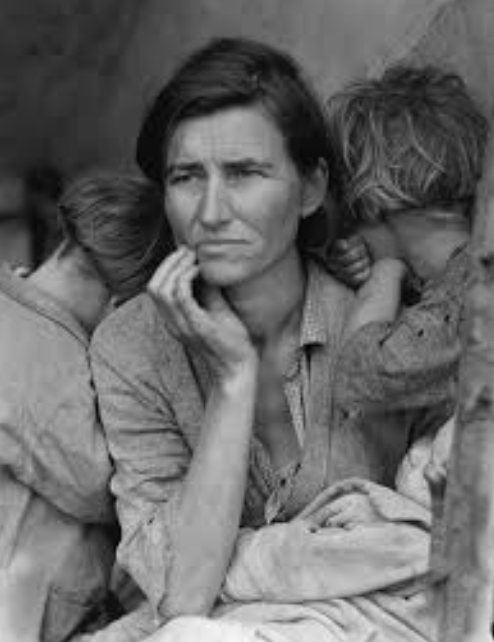
What’s going on in this pic? [vts] 2 June 2020 (high school)

Objective: Use visual thinking strategies to describe the meaning of a visual text.  Look closely at this image, stripped of its caption, and join the conversation about what you and other students see.

1. look closely at the photo; think about these three questions, and answer them completely:

— What is going on in this picture?

— What do you see that makes you say that?

— What more can you find?

2. After you have written your responses, copy them from the Google Doc attached to assignment #A-06022020-7. DO NOT copy the MLA-8 class header. Then, join the conversation by pasting your response in the comments box (WITHOUT the header).

3. Be sure to add your pkcsd email, and to give yourself an identity that includes your name or your initials.

Look closely at this image, stripped of its caption, and join the P[E]ACE conversation.

How I make a really good seafood gumbo:

ingredients:
1 cup flour
1 cup peanut oil
2 cups finely chopped onions
2 cups finely chopped bell peppers
2 cups finely chopped celery
1 cup chopped scallions (optional)
1 cup finely sliced okra
2 cloves garlic
Parsley for garnish

6 andouille or smoked sausages
1 lb. chicken thighs, drumsticks (or whole chicken)
2 lb. shrimp (preferably with heads)
2 cups crab meat and/or six crabs (preferably blue)
12-24 oysters (optional)

2 quarts chicken broth
1 tablespoon tomato paste
1 tablespoon thyme
1 tablespoon salt
1 tablespoon red pepper
1 tablespoon black pepper

Cooked white, brown, or Basmati rice.
Filé (ground sassafrass)

procedure:
First make a seafood broth from the cleaned seafood. Shell and devein (BOTH veins–on the back and under the belly!) shrimp, reserving shells. Clean crabs, reserve shells. Cover shells in a pot of cold water and simmer to make a stock (you may add a stalk of celery, a carrot, or other items you’d put in a home-made stock.)
Stop everything. Eliminate all distractions. No dogs, no kids, no phone. Now comes the roux. The Roux. It is also called Louisiana napalm.
To make the roux, I heat the peanut oil in a cast-iron 5-quart Dutch oven over medium heat. When, hot, I slowly whisk in the flour, smoothing and stirring until all flour has been added. Then I may or may not turn up the heat, but I keep stirring slowly, as the flour turns, golden, then tan, then milk chocolate, then dark chocolate. Do NOT burn the roux. If you do, throw it out and start all over. Your ingredients are too expensive to put into a bitter batch of something that looks like gumbo but tastes awful.
Be respectful of the roux. When it is a rich chocolate brown, add the chopped or minced garlic, chopped onions, bell peppers and chopped celery. This is called the holy trinity in New Orleans. Stir and mix well with the roux, continuing to stir so that the holy trinity wilts and cooks in the fat and flour mixture.
Thyme, salt, red & black peppers and the tomato paste should be added now. Slowly pour or ladle in the stock and chicken broth, stirring until all the ingredients are well mixed, turn down to a low simmer, and put a lid on the pot. Simmer about 10 minutes, then add the chicken.
Slice thin sausage medallions and quickly and lightly brown in a large skillet. Set aside.
After broth has simmered about 20 minutes, add okra. Simmer 5 minutes. Then add shrimp and simmer 5 minutes. Add fresh crab (NOT canned), and simmer 5 minutes. Add canned crabmeat. Add oysters. Stir everything together and simmer 5 minutes. Taste for seasoning and adjust if needed.
Although gumbo always tastes better the next day, who can resist?
To serve, put ½ cup or LESS of rice into a bowl, and ladle gumbo — Louisiana Love — over the rice. It should be soupy, not like gravy.

Sprinkle a teaspoon or so of filé over the gumbo. Enjoy!


“The Migration Series” :: Jacob Lawrence

View this video to learn about Jacob Lawrence, historical and cultural events that influenced his thinking, and what inspired his art.  In the comments section, post your answers to four questions about Lawrence, “The Migration Series,” and African-American migration north.


  1. Who was migrating in The Migration Series.  Where were they going?
  2. Why were they leaving the South?
  3. What type of jobs had African Americans traditionally done in the South?
  4. What type of jobs were many migrants hoping to find in the North?